Agentic AI Products: From Chatbots to Autonomous Workers
The 2026 AI product wave is not chatbots -- it is autonomous agents that take action. AI agents that triage email, review code, run sales outreach, and conduct research are replacing entire job functions. The shift from 'AI that answers' to 'AI that does' is the defining product opportunity of this cycle.
AI email triage agent -- connects to Gmail/Outlook, auto-drafts replies, escalates urgent. $19/mo.
The Pattern
The first wave of AI products was about answering questions — chatbots, search enhancements, writing assistants. The second wave, now fully underway in 2026, is about taking action. Agentic AI products do not wait for prompts. They monitor inboxes, review pull requests, qualify leads, and execute multi-step workflows autonomously. The distinction is fundamental: a chatbot is a tool you use; an agent is a worker you manage.
This shift is visible across every major AI channel and conference. Cole Medin has built his entire content strategy around agentic development patterns. SaaStr documented a company that replaced its sales development team with 20 AI agents and scaled from 1 agent to a full autonomous go-to-market operation. Wes Roth covered ClawdBot — an agent that autonomously rented a VPS, deployed itself, and started earning money without human intervention. These are not demos or thought experiments. They are production systems generating real revenue.
The technical infrastructure for building agents has matured rapidly. Frameworks like LangGraph, CrewAI, and AutoGen handle the orchestration layer. Tool-calling capabilities in Claude, GPT-4, and Gemini give agents the ability to interact with external systems. The missing piece is not technology — it is product design. Knowing how to build an agent that reliably does useful work, handles edge cases gracefully, and earns user trust is the differentiating skill.
Key Quotes
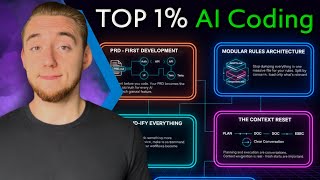
“The future of AI and SaaS is agentic experiences.” — Cole Medin, 0:35
This is not hyperbole. Every major SaaS company is either building agentic features or losing customers to startups that have them. The SaaS product of 2024 had an AI chat sidebar. The SaaS product of 2026 has AI agents that do the work the user used to do inside the product.
“ClawdBot — an agent that autonomously rented a VPS, deployed itself, and started earning money.” — Wes Roth
The ClawdBot story is significant not because it was commercially successful (it was a demonstration) but because it showed the full loop: an AI agent that could plan, execute, debug, and iterate without human intervention. The gap between “demo that works once” and “production system that runs reliably” is where the product opportunity lives.
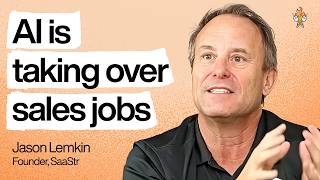
“We replaced our sales team with 20 AI agents — here’s what happened next.” — SaaStr / Jason Lemkin, 1:21
The SaaStr coverage of AI sales agents is particularly notable because it comes from the enterprise SaaS world, not the indie hacker space. When companies with $10M+ ARR are replacing human SDRs with AI agents, the market signal is unmistakable.
“Can you actually replace your team with AI? Yes, but not the way you think. You replace tasks, not people. Each agent owns one narrow function and does it better than a human ever could.” — Simon Hoiberg, 0:17
“2026 is the year of agents. Not copilots, not chatbots — agents that take multi-step actions across systems without human intervention. The bottleneck is no longer the model. It is trust, tooling, and reliability.” — OpenAI via Lenny’s Podcast, 1:07:32
“We built OpenClaw Ultron to replace 20 people at our company. It is not a demo. It runs in production, handles real workloads, and the economics are undeniable.” — This Week in Startups / Jason Calacanis, 10:43
Prediction Check
The predictions about agentic AI from 2024-2025 have largely come true by early 2026, faster than most expected.
OpenAI called 2025 “the year of agents” — and they were right, just early. The real inflection happened in late 2025 and early 2026 when tool-calling reliability crossed the threshold needed for production deployment. OpenAI’s own interview on Lenny’s Podcast confirmed that the bottleneck shifted from model capability to trust and tooling infrastructure. By February 2026, the agent stack is mature: reliable tool calling, persistent memory, multi-step planning, and graceful error recovery all work well enough for narrow, well-defined tasks.
OpenClaw proved autonomous agents can operate in production. The OpenClaw project, covered extensively by Lex Fridman and Jason Calacanis, became the most visible proof point. Peter Steinberger’s interview on the Lex Fridman Podcast detailed how OpenClaw went from a viral demo to a production system. Jason Calacanis covered a company that deployed OpenClaw Ultron to replace the equivalent of 20 full-time employees — not as a cost-cutting exercise, but because the agents handled specific tasks with higher consistency and speed than humans could.
SaaStr’s prediction about agent-driven GTM materialized. The companies that started experimenting with AI sales agents in 2024 have now scaled to fleets of 20+ agents running full go-to-market operations. The early adopters documented by SaaStr are reporting that AI SDR agents outperform human SDRs on volume and consistency, though humans still outperform on complex deal navigation and relationship building.
The “narrow agent” thesis won over the “general assistant” approach. Simon Hoiberg’s framing — replace tasks, not people — became the consensus by 2026. Every successful agent deployment focuses on one well-defined function. The general-purpose AI assistant remains an aspiration; the single-function AI agent is a production reality.
Concrete Ideas
- AI agent for email triage — connects to Gmail or Outlook, classifies every incoming email (urgent/important/routine/spam), auto-drafts replies for routine messages (meeting confirmations, simple questions, acknowledgments), and escalates important messages with a summary and suggested response. The user reviews and sends with one click instead of reading and writing from scratch. Saves 1-2 hours per day for anyone who receives 50+ emails.
- AI agent for code review — monitors a GitHub organization, automatically reviews every pull request against the team’s style guide and best practices, flags potential bugs and security issues, suggests specific fixes with code diffs, and approves trivial PRs (typo fixes, dependency updates) without human intervention. More thorough than human reviewers because it never gets tired or rushes before lunch.
- AI sales agent (SDR replacement) — handles outbound prospecting: researches target companies, personalizes emails based on recent news and company data, follows up on a schedule, qualifies responses, and books meetings on the calendar. SaaStr documented teams running 20 of these agents simultaneously, each handling a different territory or persona.
- Personal research agent — configured with your interests and sources, it monitors 100+ RSS feeds, newsletters, Twitter accounts, and news sites daily. Every morning, it delivers a personalized digest with the 5-10 most relevant items, each summarized with why it matters to you specifically. Think of it as a personalized Daily Brief powered by deep understanding of your context.
- AI meeting preparation agent — before every calendar event, it researches the attendees (LinkedIn, company news, previous interactions from your CRM), prepares a briefing document with talking points, and drafts follow-up emails. The agent runs automatically whenever a new meeting appears on your calendar.
Analysis
The most important technical insight from Cole Medin’s work is that agent reliability comes from narrow scope, not from better models. An agent that does one thing — email triage, code review, lead qualification — can be made highly reliable through careful prompt engineering, extensive testing, and graceful degradation. An agent that tries to do everything (the “general AI assistant”) fails unpredictably because the surface area of potential failures is too large.
This has direct product implications. The winning agentic products will not be “AI that can do anything.” They will be “AI that does [specific task] with 99% reliability.” The specificity is the product. Customers do not want an agent that can handle email, code review, and sales outreach. They want an agent that handles email triage so well they never worry about it again.
The SaaStr case study of 20 AI sales agents is instructive on the management dimension. Running multiple agents requires monitoring, tuning, and intervention — not unlike managing a team of humans, but with different failure modes. The agents do not get demotivated, but they can get stuck in loops. They do not have bad days, but they can misinterpret context. The tooling for managing fleets of AI agents is itself a product opportunity.
Simon Hoiberg’s framing is essential: you replace tasks, not people. The most successful agent deployments take one well-defined task that a human currently does repeatedly and automate it completely. The human moves up the stack to judgment, strategy, and relationship work. This is a more honest and more achievable framing than “replace your entire team with AI.”
What to Build
AI email triage agent. Connects to Gmail or Outlook via OAuth, runs continuously in the background, and handles incoming email with three tiers of automation. Tier 1: auto-archive obvious noise (notifications, newsletters you never read, marketing emails). Tier 2: auto-draft replies for routine messages (meeting confirmations, simple questions, FYI acknowledgments) and present them for one-click send. Tier 3: flag urgent/important messages with a summary and suggested response, delivered as a push notification.
Price at $19/month for personal use, $49/month for business (multiple accounts, CRM integration, custom rules). The key technical challenge is accuracy on the triage classification — a false positive on “urgent” erodes trust quickly. Start with a conservative threshold (only flag as urgent if very confident) and let users calibrate over time. The onboarding should include a one-week “shadow mode” where the agent classifies but does not act, so the user can verify its judgment before granting autonomy.
2026 update: The OpenClaw wave proved that agents can run reliably in production, and the tooling has caught up. The opportunity in 2026 is not building another general agent framework — that space is crowded. The opportunity is building vertical agents for specific business functions with deep domain integration. An email triage agent that understands your industry’s terminology, a code review agent trained on your team’s codebase conventions, a sales agent that integrates with your specific CRM and follows your qualification methodology. The companies deploying OpenClaw Ultron-style agent fleets need management infrastructure: dashboards to monitor agent performance, alerting when agents get stuck, A/B testing frameworks for agent prompts, and audit trails for compliance. Building the “Datadog for AI agents” is a strong 2026 play.
// source videos (13)

Cole Medin

Cole Medin
Cole Medin

Wes Roth · 5:45

Wes Roth
SaaStr · 19:19

SaaStr

Cole Medin

Simon Hoiberg

Lenny's Podcast

Lex Fridman

This Week in Startups

AI Jason