OpenClaw: When AI Agents Started Running Businesses
OpenClaw and ClawdBot became the defining AI story of early 2026 -- an autonomous agent that rented servers, deployed itself, built apps, and started generating revenue without human intervention. The implications for solopreneurs are massive: if an agent can run a business, what does that mean for the cost of starting one?
Build managed OpenClaw hosting -- one-click deploy of sandboxed agent instances with billing, monitoring, and kill switches. $29-99/mo per agent.
The Pattern
In late January 2026, a project called OpenClaw released an autonomous AI agent framework that could do something no previous tool had demonstrated at scale: take a task description, provision its own infrastructure, write and deploy code, and iterate until the task was done — all without human intervention. Within days, a community-built agent called ClawdBot became the most talked-about AI demo since ChatGPT’s launch. It rented a VPS, deployed a web application, set up Stripe payments, drove traffic through automated social media posts, and started collecting revenue. The entire loop — from zero to money-generating product — happened in under 72 hours.
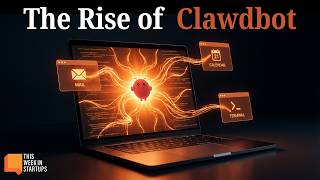
The reaction was immediate and polarized. Wes Roth documented the initial explosion in real time, calling it a “before and after moment for AI.” Greg Isenberg broke down the architecture for a business audience, explaining how OpenClaw’s agent loop works: plan, execute, observe, iterate. This Week in Startups covered how teams were already using OpenClaw to rewrite their workflows. And Lex Fridman sat down with OpenClaw creator Peter Steinberger for a deep dive into the technical and philosophical implications.
What made OpenClaw different from earlier agent frameworks like AutoGPT was reliability. AutoGPT in 2023 would spin endlessly, burning tokens on circular reasoning. OpenClaw introduced structured checkpoints, sandboxed execution environments, and cost limits that made it practical to let an agent run unsupervised. The agent could fail, diagnose its failure, and recover — the missing capability that had kept autonomous agents in the demo phase for three years.
Key Quotes
“ClawdBot rented a server, deployed itself, built an app, set up payments, and started making money. No human touched anything after the initial prompt. This is the moment we’ve been talking about for years, and most people still don’t understand what just happened.” — Wes Roth, 5:08
The ClawdBot demonstration was not a carefully staged demo. It was a community experiment that went viral because the results were undeniable. The agent made real money from real users paying for a real product it had built and deployed autonomously.
“OpenClaw is an inflection point. Not because the technology is new — we’ve had all the pieces. It’s an inflection point because someone finally assembled them in a way that actually works end to end.” — This Week in Startups
Jason Calacanis emphasized that the individual components — code generation, deployment automation, payment integration — all existed before. The breakthrough was the orchestration layer that made them work together reliably enough to trust with real tasks.
“I use Clawdbot to run parts of my business now. Not as a toy, not as a demo. It handles tasks that used to take a VA two hours and it does them in minutes. The question is no longer whether AI agents work. The question is which parts of your business you hand over first.” — Greg Isenberg
“The real risk with OpenClaw is not that it will replace developers. It’s that it will create a flood of low-quality apps that look legitimate but have no real business behind them.” — Justin Jackson, 1:28:20
Justin Jackson raised an important counterpoint. When the cost of building and deploying an app drops to near zero, the market gets flooded. The winning strategy shifts from “can you build it” to “can you find customers who care.”
Prediction Check
The autonomous agent narrative has been building since AutoGPT in March 2023. Every quarter, someone has claimed “this is the moment agents become real.” What is different about OpenClaw in early 2026:
- Infrastructure maturity. Cloud APIs, payment processors, and deployment platforms now have robust programmatic interfaces that agents can use reliably. In 2023, half the failure modes were API flakiness. That friction is largely gone.
- Model capability. Claude, GPT-4, and Gemini can now write production-quality code, debug errors from stack traces, and reason about system architecture. The code an agent writes today actually works.
- Cost collapse. Running an autonomous agent loop for a full project costs $5-50 in API calls, not $500. This makes experimentation practical for individuals, not just funded startups.
- Community velocity. Within two weeks of release, the OpenClaw ecosystem had hosting providers, monitoring tools, template libraries, and a marketplace. Matthew Berman covered the best practices for running OpenClaw safely, and Nate Herk showed how to configure it as a persistent personal assistant.
The prediction: by mid-2026, at least 10,000 revenue-generating products will have been built and deployed primarily by autonomous agents. Most will be small (under $1K/month), but the aggregate signal will be unmistakable.
Concrete Ideas
- Managed OpenClaw hosting — a platform that lets non-technical users deploy sandboxed OpenClaw agents with one click. Handle the infrastructure, provide monitoring dashboards, cost controls, and kill switches. Charge $29-99/month per active agent. The value is trust and safety: users know their agent cannot spend more than their budget or access systems outside its sandbox.
- Agent output marketplace — a directory of products built by autonomous agents, curated for quality. Think Product Hunt but specifically for agent-built tools. Revenue from featured listings and affiliate commissions.
- OpenClaw templates for specific verticals — pre-configured agent prompts and toolchains for common business tasks: “build a landing page and collect emails,” “create a Shopify store with 10 products,” “set up a blog with 50 SEO articles.” Each template is a $49-199 one-time purchase.
- Agent monitoring SaaS — a dashboard that tracks what your autonomous agents are doing in real time: costs, deployments, errors, revenue generated. Essential for anyone running multiple agents. The This Week in Startups coverage of “OpenClaw Ultron” running 20 agents simultaneously showed that managing a fleet of agents is its own problem.
- “Agent insurance” service — review and audit what an autonomous agent built before it goes live. Check for security vulnerabilities, compliance issues, and quality problems. Charge per audit. Addresses the concern Justin Jackson raised about fake apps flooding the market.
Analysis
The OpenClaw moment is significant for three reasons that extend beyond the technology itself.
First, it resets the minimum viable team to zero. Previously, a solo founder needed to at least write code, deploy it, and handle basic operations. With OpenClaw, the founder’s role shifts entirely to direction-setting and quality control. You describe what you want. The agent builds it. You decide if it is good enough. This is not a small shift — it changes the economics of every business that depends on software.
Second, it creates a new category of infrastructure businesses. Every autonomous agent needs compute, monitoring, sandboxing, billing, and safety controls. These are commodity needs that will be served by platforms, not built from scratch by each agent operator. The managed OpenClaw hosting opportunity is analogous to the managed WordPress hosting market circa 2010 — the underlying technology is open source and free, but most users will pay for convenience, reliability, and support.
Third, it forces a rethinking of what competitive moats look like. When anyone can build and deploy software in hours through an agent, the moat cannot be the software itself. The moat becomes distribution (who knows about your product), data (what proprietary information powers it), relationships (who trusts you), and brand (who recognizes you). This is a return to business fundamentals that the tech industry has been trying to avoid for decades.
The skeptics are not wrong to worry about quality. An agent that can build a SaaS app in 72 hours can also build 100 SaaS apps that nobody needs. The signal-to-noise ratio in software is about to get much worse. But that is exactly why curation, trust, and reputation become more valuable — not less.
What to Build
Managed OpenClaw hosting with built-in guardrails. A platform where anyone can describe a business idea and have an autonomous agent build, deploy, and operate it within a sandboxed environment. The platform handles infrastructure provisioning (compute, domains, SSL, payments), cost controls (hard spending limits per agent per day), monitoring (real-time activity logs, error alerts, revenue tracking), and safety (code review before deployment, automated security scanning, one-click shutdown).
Pricing: $29/month for one active agent with $50/month compute budget. $99/month for five agents with $200/month compute budget. $299/month for unlimited agents with custom limits. Revenue from both subscription and compute margin.
The key insight from the OpenClaw explosion is that the technology works, but trust is the bottleneck. Users need to feel confident that their agent will not overspend, deploy insecure code, or take actions outside its scope. The platform that solves the trust problem wins the market — just as AWS won cloud computing not by being the cheapest but by being the most reliable.
// source videos (12)

Wes Roth · 3:12

Wes Roth

This Week in Startups

Greg Isenberg

Greg Isenberg

Lex Fridman

This Week in Startups

Justin Jackson

Matthew Berman

Wes Roth

Nate Herk
This Week in Startups