Solo AI Founder Playbook: Welsh, Levels, Lou
Justin Welsh built $10M with no team. Pieter Levels hits $300K/month as an indie dev. Marc Lou shipped 23 websites to $1M/year. The solo AI founder is not a compromise — it is a structural advantage. AI tools have collapsed the minimum viable team to one.
Pick one painful workflow, ship an AI-powered micro-SaaS in 2 weeks, charge $19-49/mo. No team, no funding, no permission.
The Pattern
Three founders have independently converged on the same playbook: build alone, ship fast, stay small on purpose. Justin Welsh runs a $10M/year content and education business with zero employees and works two hours a day. Pieter Levels operates NomadList, RemoteOK, and PhotoAI pulling $300K/month from a laptop, no office, no team. Marc Lou shipped 23 websites in two years and crossed $1M/year in revenue by killing projects that do not grow and doubling down on the ones that do.
The pattern is not “I could not afford a team.” It is “a team would make me slower.” Welsh calls freedom the constraint that scales — the fewer people you manage, the more time you spend on the work that actually generates revenue. Levels automates everything that can be automated and does the rest himself. Lou treats every product like a 2-week experiment: if it does not hit $1K MRR fast, he moves on.
AI tools have made this playbook dramatically more accessible. What used to require a designer, a backend engineer, and a marketer can now be done by one person with Claude, Cursor, and a Stripe account. The Starter Story interview with the 28-app builder proves the extreme version: $10K/month from a portfolio of micro-apps, each built with AI assistance in days, not months.
Key Quotes
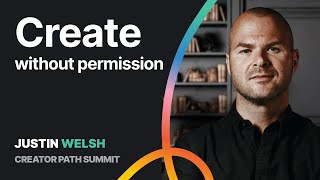
“I built a $10 million business with no team. Not because I couldn’t hire — because every person I add is a constraint on my freedom. The business is designed around my life, not the other way around.” — Justin Welsh, 1:03
Welsh’s framing rejects the default assumption that growth requires headcount. He structures his business so that revenue scales with content and systems, not with people. His two-hour workday is not laziness — it is the result of ruthlessly eliminating everything that does not directly produce revenue or audience growth.
“I mass-produce startup ideas. I do not plan for months. I build something in a weekend, put it on the internet, and if people pay for it, I keep building. If they don’t, I kill it and move on.” — Marc Lou, 4:45
Lou’s approach is the opposite of the traditional startup playbook. No market research decks, no investor pitches, no roadmaps. Ship, measure, decide. His $562K from 23 websites came from volume and speed, not from perfecting a single product. The indie hacking critique is worth watching as a counterpoint — not everyone who ships fast succeeds, and survivorship bias is real. But Lou’s hit rate across dozens of attempts proves that speed and iteration beat planning and deliberation.
“The $10M multipreneur is someone who has 3-5 businesses each doing $2-3M. They are not trying to build the next unicorn. They are building a portfolio of small, profitable things.” — Greg Isenberg, 0:16
Prediction Check
- Solo founders hitting 7 figures: Confirmed and accelerating. Welsh ($10M), Levels ($3.6M/year), Lou ($1M+/year), and the growing wave of AI-assisted builders on Starter Story all validate the model. The ceiling keeps rising as AI tools improve.
- AI replacing the early team: Partially confirmed. AI handles first drafts of code, copy, design, and customer support well enough for a solo founder to ship v1. But it does not yet replace deep domain expertise, taste in product decisions, or relationship-based sales.
- Portfolio approach beating single-product focus: Mixed. Lou’s portfolio model works for consumer micro-SaaS. Welsh’s single-brand approach works for content businesses. The right model depends on whether your distribution is brand-based (Welsh) or product-based (Lou/Levels).
Concrete Ideas
- AI email course generator — Welsh’s business runs on digital products sold to his audience. Build a tool that takes a topic and generates a complete 5-day email course (copy, subject lines, CTA sequences) in minutes. Charge $29/mo for unlimited courses. Solo founders and creators are the target market and they understand the value immediately.
- Micro-SaaS portfolio launcher — a framework and toolkit for the Marc Lou approach. Boilerplate with auth, payments, landing page, and analytics pre-wired. Ship a new SaaS in a weekend instead of two weeks. Sell the template for $99 one-time or $19/mo for updates and new integrations. ShipFast already does this, proving the demand.
- Solo founder CRM — most CRMs are built for sales teams. A solo founder needs something radically simpler: track 50 key relationships, set follow-up reminders, log conversations. No pipeline stages, no forecasting dashboards, no team features. Just a personal Rolodex with AI-powered follow-up suggestions. $19/mo.
- AI content repurposing engine for solopreneurs — Welsh turns one LinkedIn post into tweets, newsletters, and course material. Automate that workflow: paste one piece of long-form content, get 10 derivative pieces formatted for different platforms. The content repurposing pattern is well-documented; the opportunity is in making it dead simple for non-technical solo founders.
- “What’s working” dashboard — aggregate revenue, traffic, and engagement across multiple micro-SaaS products into one view. Levels and Lou both run portfolios but use separate dashboards for each product. A unified view with AI-generated insights (“Product X is trending up, Product Y has churning users — here is why”) would save portfolio founders hours per week.
Analysis
The solo AI founder model works because of a structural shift in the cost of production. Writing code, generating designs, drafting marketing copy, handling basic customer support — all of these tasks have collapsed in cost and time. The minimum viable team for a software business used to be 3-5 people. Now it is one person with the right tools.
But the model has clear limitations that the hype often glosses over. Welsh built his audience over years of consistent content creation before monetizing at scale. Levels had a decade of shipping products and building technical skills before PhotoAI took off. Lou failed at most of his 23 projects — the successes subsidize the failures. The Indie Hackers critique correctly points out that for every visible solo success, there are thousands of invisible failures.
The honest version of the playbook is: build an unfair advantage in one dimension (Welsh: audience, Levels: technical speed, Lou: shipping velocity), then use AI tools to eliminate the need for help in every other dimension. The AI does not create the advantage. It removes the bottlenecks that used to force you to hire.
Greg Isenberg’s $10M multipreneur framework adds an important nuance. You do not need one product doing $10M. You need 3-5 products each doing $2-3M, or even 10 products each doing $100K. The portfolio approach is more resilient (no single point of failure) and more learnable (each product teaches you something that makes the next one faster).
The Welsh model of working two hours a day is the aspirational endgame, but it requires years of compounding. The Lou model of shipping fast and killing losers is the realistic starting point. Start with volume, graduate to focus.
What to Build
Pick one painful workflow you personally experience, build an AI-powered solution in two weeks, and charge for it. Do not hire. Do not raise money. Do not build a landing page until the product exists. Use Claude for code, Cursor for iteration, Stripe for payments, and your personal network for the first 10 customers.
The target is $1K MRR within 60 days. If you hit it, keep building. If you do not, kill the project and start the next one. Run this loop 3-5 times per year. By the end of year one, you will either have a product worth focusing on or a portfolio generating $5-10K/month across multiple small bets. Either outcome is a foundation you can build on without ever needing a team, an office, or permission from anyone.
// source videos (12)

Justin Welsh

Justin Welsh

Starter Story

Justin Welsh

levelsio

Justin Welsh

Indie Hackers

Marc Lou

Marc Lou

Greg Isenberg
Justin Welsh

Marc Lou